North Sikkim Tour Package from Gangtok:
If you have ever seen a photograph of a frozen turquoise lake sitting under bare snow peaks and wondered where on earth it is, there is a good chance you were looking at North Sikkim. This corner of the Eastern Himalayas holds some of the most dramatic high-altitude scenery in India, and almost every visitor reaches it the same way: by booking a North Sikkim tour package from Gangtok and heading north into the restricted valleys.
This guide walks you through exactly what such a package covers, the route, the permits you cannot skip, the best months to travel, and the honest health precautions nobody should ignore. Whether it is your first Himalayan trip or your tenth, you will leave this page knowing how to plan the journey properly.
*Wondering how transport works in the hills! Read our Gangtok Cab Service guide to understand vehicle options, permit rules, sightseeing taxis, and why only Sikkim-registered vehicles are allowed on most North Sikkim routes.
Why Every North Sikkim Trip Begins in Gangtok
Gangtok is the capital of Sikkim and the natural launch point for the entire northern circuit. Two practical reasons make it the starting line. First, the permits for the restricted North Sikkim region are processed here, and they are only issued to travellers moving through a registered local operator. Second, the vehicles allowed on these mountain roads are Sikkim-registered taxis arranged from Gangtok, so a rented car from elsewhere simply will not be permitted past the checkpoints.
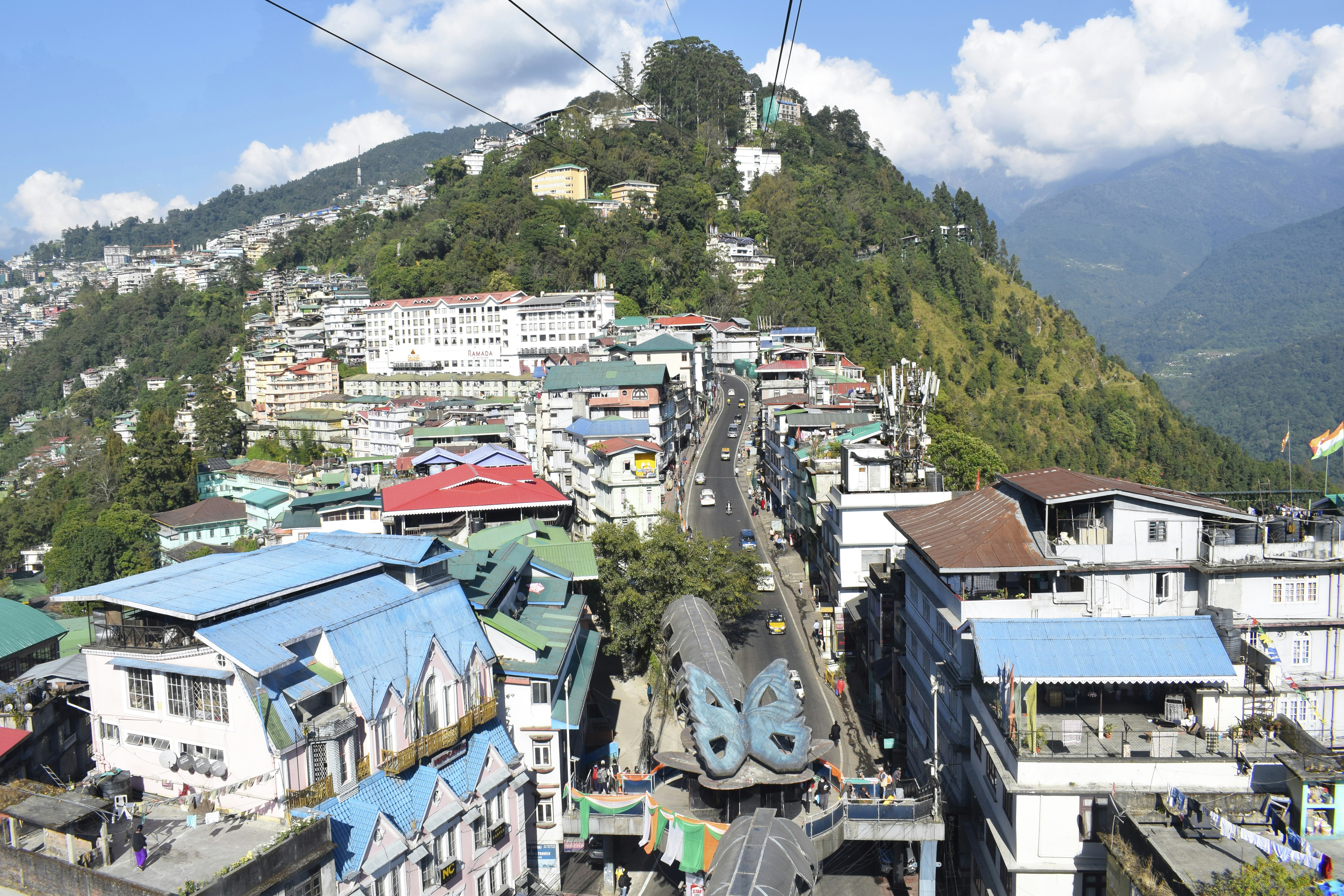
Beginning in Gangtok also gives your body a gentle first step. At roughly 1,650 metres, the city sits well below the altitudes you will reach later, which makes it a sensible place to rest for a night, sort your paperwork, and stroll along the pedestrian stretch of M.G. Marg before the real climb begins.
*If you're still comparing different routes before choosing North Sikkim, explore our Best Sikkim Tour Packages to find the ideal itinerary for your travel style.
What a North Sikkim Tour Package Covers
A well-planned package threads together two very different valleys, each with its own headline attraction. Here is what you can expect to see.
Lachen and Gurudongmar Lake
Lachen is a quiet mountain village at around 2,750 metres and serves as the base for the crown jewel of the trip: Gurudongmar Lake. Sitting at roughly 5,430 metres (about 17,800 feet), Gurudongmar is one of the highest lakes in the world reachable by road, and it is considered sacred by Buddhists, Sikhs and Hindus alike.
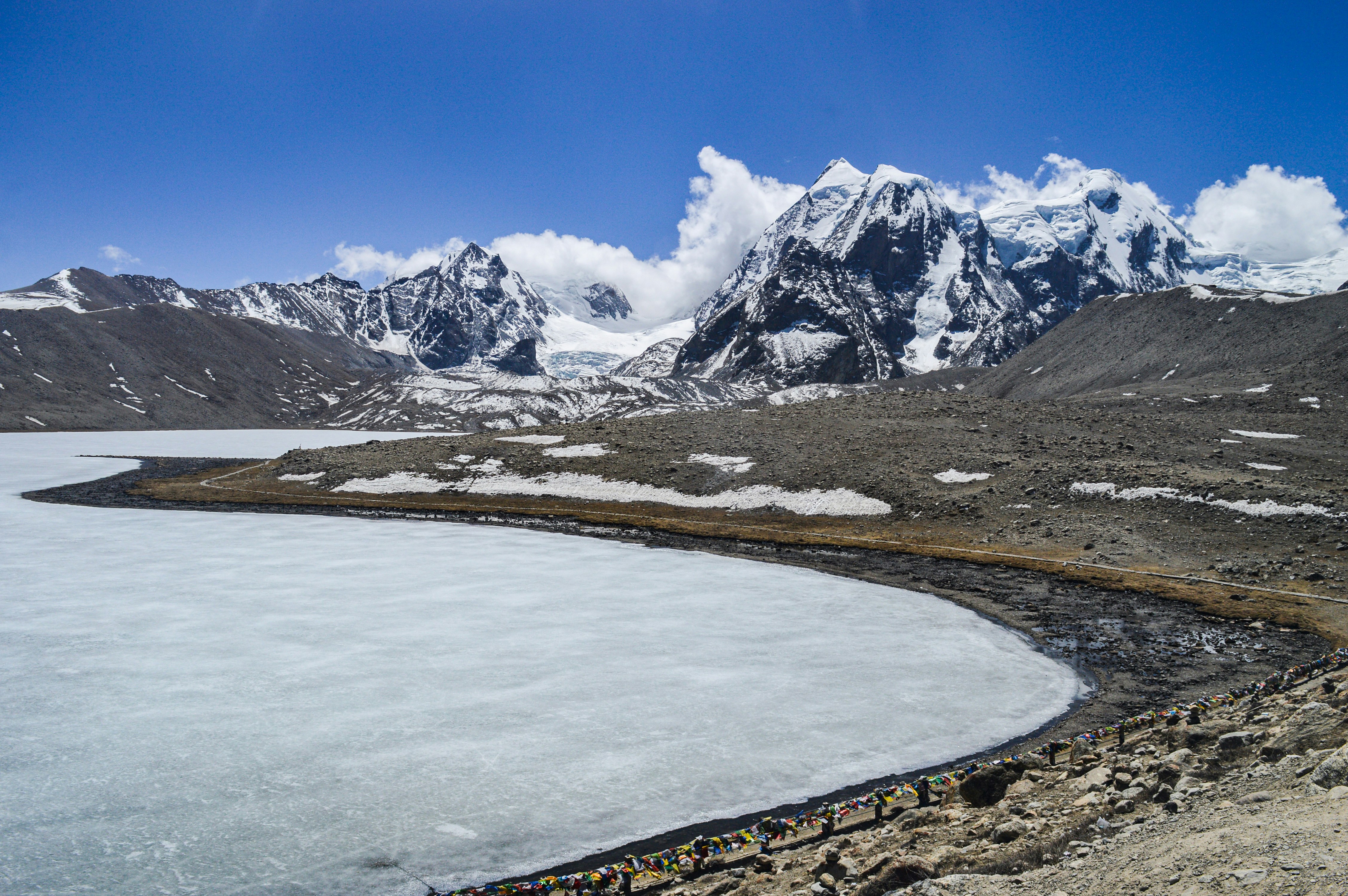
The visit is genuinely early. Most packages have you leaving Lachen around 4:00 a.m. so you reach the lake before the fierce high-altitude winds pick up and while there is still plenty of daylight for a safe descent. The reward is a sheet of impossibly still water, partly frozen at the edges even in spring, ringed by snow. The thin air makes conversation feel like effort, and most travellers describe a strange, involuntary quiet the moment they step out of the vehicle.
Lachung, Yumthang Valley and Zero Point
The second valley belongs to Lachung, a charming village that acts as the gateway to Yumthang Valley, widely known as the Valley of Flowers. In spring, the slopes here erupt with rhododendron blooms, and a natural hot spring nearby offers a warm pause in the cold. Beyond Yumthang lies Zero Point, the last civilian point on the road, where the tarmac ends and snow often surrounds you even in the warmer months.
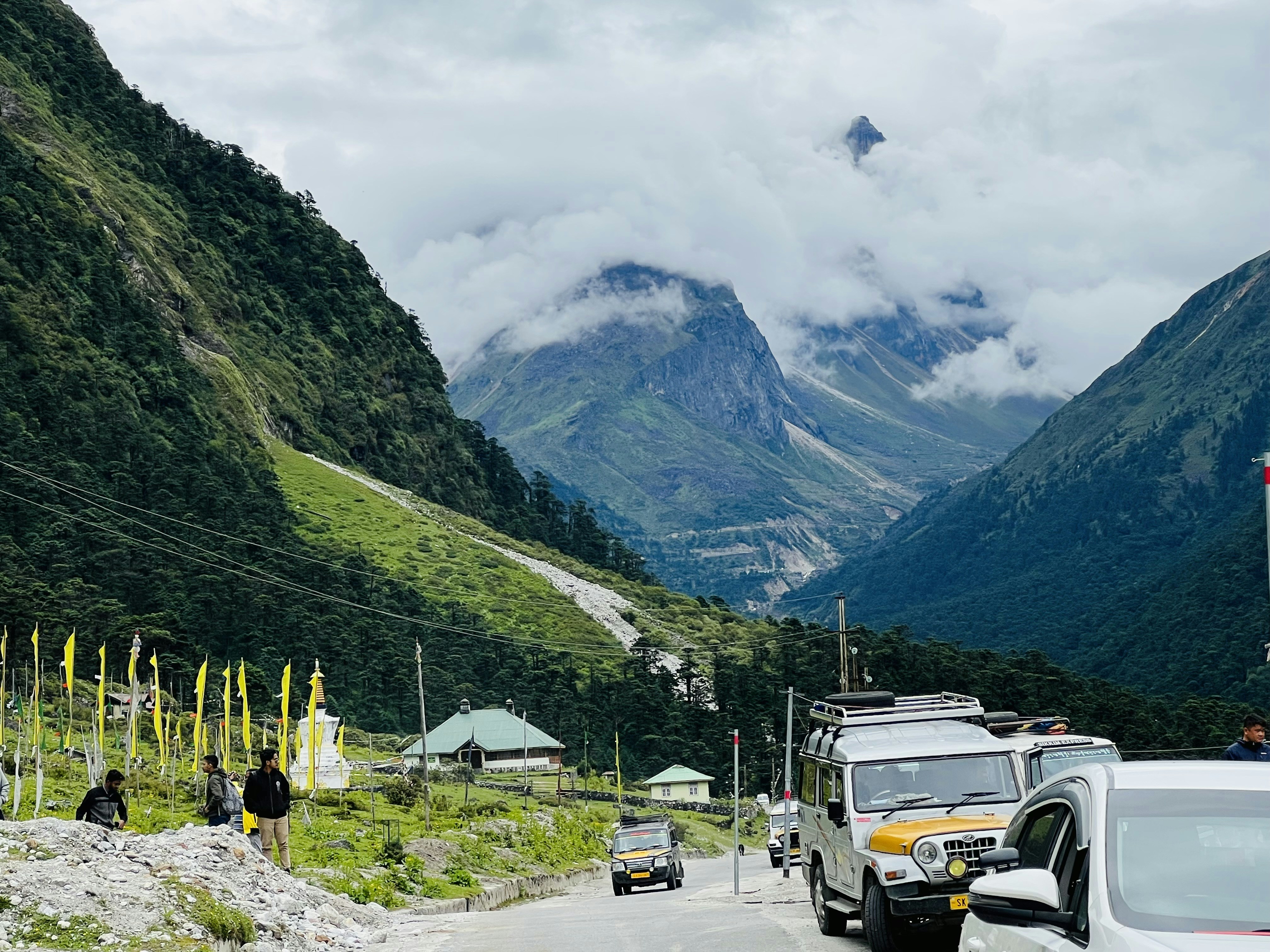
Together, Lachen and Lachung give you the full sweep of North Sikkim: sacred high-altitude wilderness on one side, alpine meadows and hot springs on the other.
Distance and Travel Time from Gangtok:
North Sikkim is less about covering long distances and more about navigating winding Himalayan roads. Although the kilometres may seem manageable, travel takes time because of steep mountain terrain and frequent viewpoints.
| Route |
Distance |
Approximate Travel Time |
| Gangtok to Lachen |
120 km |
6–7 Hours |
| Lachen to Gurudongmar Lake |
68 km |
3 Hours |
| Lachen to Lachung |
47 km |
2–3 Hours |
| Lachung to Yumthang Valley |
25 km |
1–1.5 Hours |
| Yumthang Valley to Zero Point |
23 km |
1 Hour |
| Lachung to Gangtok |
115 km |
6–7 Hours |
Travel times may vary depending on road conditions, weather, military movement, and permit checkpoints. During winter and after heavy rainfall, journeys may take longer than expected.
*If you have extra time, consider extending your journey with our Sikkim Tour Package for 7 Days, covering Gangtok, North Sikkim, Pelling, Tsomgo Lake, and Nathula Pass in one complete itinerary.
Comfortable 5-Day Itinerary:
Most reliable operators build the trip as a four-night, five-day loop, and the pacing matters because it manages your altitude gain sensibly. A typical plan looks like this:
Day 1 – Arrive in Gangtok. Settle in, acclimatise, and explore M.G. Marg in the evening.
Day 2 – Gangtok to Lachen. A scenic six-to-seven-hour drive past the Seven Sisters Waterfalls, with a lunch stop near Mangan. Overnight in Lachen. Rest early.
Day 3 – Gurudongmar Lake, then Lachung. A pre-dawn start to the lake, then a return and transfer across to Lachung for the night.
Day 4 – Yumthang Valley and Zero Point. Explore the Valley of Flowers and push up to Zero Point (weather permitting) before returning to Gangtok in the evening.
Day 5 – Departure. Head onward to Bagdogra, Siliguri or your next destination.
Some travellers prefer a slightly longer six or seven-day version that spreads the driving out and adds an extra buffer day for weather. If you are prone to altitude discomfort, the longer format is worth the extra time.
Permits: The Most Important Part
North Sikkim is a restricted border region, and access is controlled. For Lachen, Lachung and Yumthang you need a Protected Area Permit (also referred to as a Restricted Area Permit), and Indian nationals need it processed to reach Gurudongmar Lake as well.
A few things are worth knowing before you travel. Solo permits are not issued, so you must book through a registered Sikkim travel agent who applies on your behalf. The paperwork typically requires a valid photo ID and passport-size photographs, and most itineraries must include a minimum overnight structure across Lachen and Lachung to be approved. Foreign nationals face additional restrictions and, in some cases, cannot access Gurudongmar Lake at all, so overseas travellers should confirm their exact eligibility with an operator in advance.
The reassuring part is that a good package handles every bit of this for you. You simply provide your documents, and your operator does the running around in Gangtok.
Best Time to Visit North Sikkim
The season generally runs from October through May, and the monsoon months in between are deliberately avoided. Here is why the timing matters:
- Spring (March to May) brings the rhododendron blooms to Yumthang and clearer views, making it the most popular window.
- Autumn (October to early December) offers crisp air, low humidity and excellent visibility of the peaks.
- Winter (December to February) delivers heavy snow and a frozen Gurudongmar, which is spectacular but bitterly cold and occasionally subject to road closures.
Heavy woollens are essential year-round at these altitudes, especially for Gurudongmar and Zero Point, where the temperature drops sharply regardless of the calendar.
*If you have an extra day before heading north, our Gangtok Package for 5 Days covers the city's top attractions, including MG Marg, Tsomgo Lake, Baba Mandir, and Nathula Pass, making it a perfect addition to your North Sikkim journey.
Altitude and Health Info For North Sikkim:
Reaching almost 5,500 metres is not something to take lightly. At Gurudongmar, oxygen levels are significantly lower, and this can trigger Acute Mountain Sickness if you climb too fast. Give yourself the night in Gangtok and the night in Lachen to acclimatise, drink plenty of water, and avoid alcohol before the high-altitude day.
Young children and older travellers, particularly anyone with heart or respiratory conditions, should consult a doctor before committing to the Gurudongmar leg. And it helps to travel with realistic expectations: access to the lake can be suspended at short notice for weather or road repairs, so it is never fully guaranteed on a fixed date. A dependable operator will always prioritise your safety over ticking a box, redirecting the route to accessible areas like Yumthang if conditions turn.
What's Included in North Sikkim Tour Package from Gangtok
Most North Sikkim tour packages from Gangtok are designed to make the journey hassle-free, especially because permits, transportation, and accommodation need careful coordination. While inclusions vary slightly between operators, a standard package generally includes:
- Pickup and drop from your hotel in Gangtok
- All required North Sikkim permits arranged by the tour operator
- A Sikkim-registered SUV driven by an experienced local mountain driver
- Accommodation in Lachen and Lachung
- Breakfast and dinner during your stay in North Sikkim
- Sightseeing to Gurudongmar Lake, Yumthang Valley, and other destinations mentioned in the itinerary
- Assistance throughout the journey
Some premium packages may also include upgraded hotels, private vehicles, and customised sightseeing. Before confirming your booking, always check the inclusion and exclusion list so there are no unexpected expenses during the trip.
How to Choose the Right Package
Not all packages are equal. When comparing options, look for transparent inclusions: permits, a Sikkim-registered vehicle with an experienced mountain driver, comfortable overnight stays in Lachen and Lachung, and clear pricing without hidden costs. Reliable local knowledge is what separates a smooth trip from a stressful one, particularly when the weather forces a change of plan.
Booking with an established Gangtok-based operator such as Safarnama Holidays means the permits, vehicles and stays are arranged as one seamless plan, letting you focus on the scenery rather than the logistics.
Frequently Asked Questions
How many days do I need for a North Sikkim tour from Gangtok?
A minimum of four to five days is recommended so your body can acclimatise safely. A six or seven-day version adds a comfortable weather buffer.
Do I need a permit for North Sikkim?
Yes. A Protected Area Permit is mandatory and must be arranged through a registered operator, as solo permits are not issued.
Is Gurudongmar Lake open in 2026?
The Lachen and Gurudongmar route reopened in phases through early 2026 after earlier flood damage. Access can still be paused for weather or repairs, so always reconfirm current status before locking your dates.
Can foreigners visit Gurudongmar Lake?
Foreign nationals face additional restrictions and may not be permitted to visit Gurudongmar. Confirm eligibility with your operator before booking.
Is North Sikkim safe for elderly travellers?
It can be, with proper acclimatisation, but anyone with heart or respiratory conditions should consult a doctor before the high-altitude segment.